


The History of Double Dutch
The Discipline
Double Dutch appeared more than 300 years ago in New York, introduced by the children of Dutch immigrants.
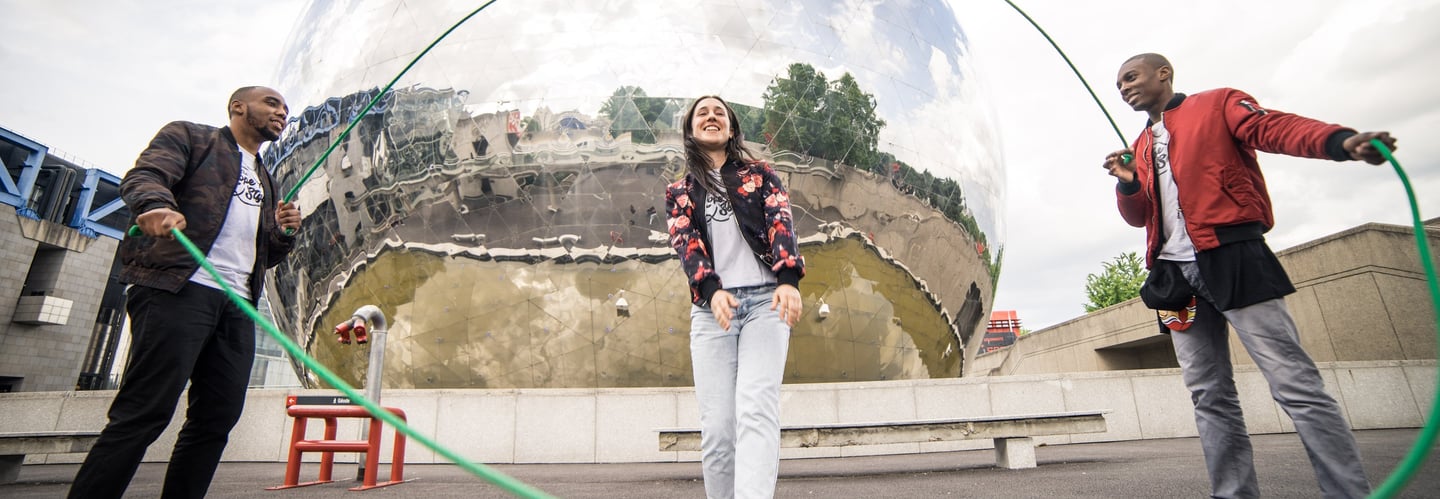
It is a game and an art that is practised by several people with a minimum of three participants (one jumper and two turners) as well as two ropes.
The Sporting Dimension
The sporting dimension of Double Dutch appeared during the 1970s.
Thanks to strong neighbourhood networks and community structures, the discipline developed among African-American youth in the New York districts.
Association with Hip-Hop Culture
At the beginning of the 1980s, Double Dutch became associated with New York Hip-Hop culture.
It was introduced in France at the end of 1982 by the world champion team Fantastic Four Double Dutch, who performed during the New York City Rap Tour.
The first French Double Dutch team “Dutch Four System” was created.
Double Dutch in France
Eight years later, in 1990, the French Double Dutch Federation was created.
Today, the activity is developing through schools and various associations.
The World of Double Dutch
Double Dutch is a recognised sport that can be found everywhere in the world.
It has its rules, its federations and its competitions (cf https://ijru.sport/members).
Championships
They highlight the sporting aspect, with a speed event and a freestyle event.
There are national championships as well as a world championship.
For more information, you can consult the following links:
IJRU Sport and YouTube.
Contests
Contests highlight the artistic and choreographic aspect of Double Dutch.
Competitions include a speed event, 2-minute artistic performances, and a team battle for the 4 finalists.
There are national contests as well as a world contest.
For more information, you can consult the following links:
Double Dutch Contest and YouTube.
Battles
Battles highlight the dance and Hip-Hop origins of Double Dutch.
They include team battles and 1-on-1 duels.
There are national battles and a world battle.
For more information, you can consult the following links:
DD Ones and YouTube.
Double Dutch Danse et Gymnastique
Our History
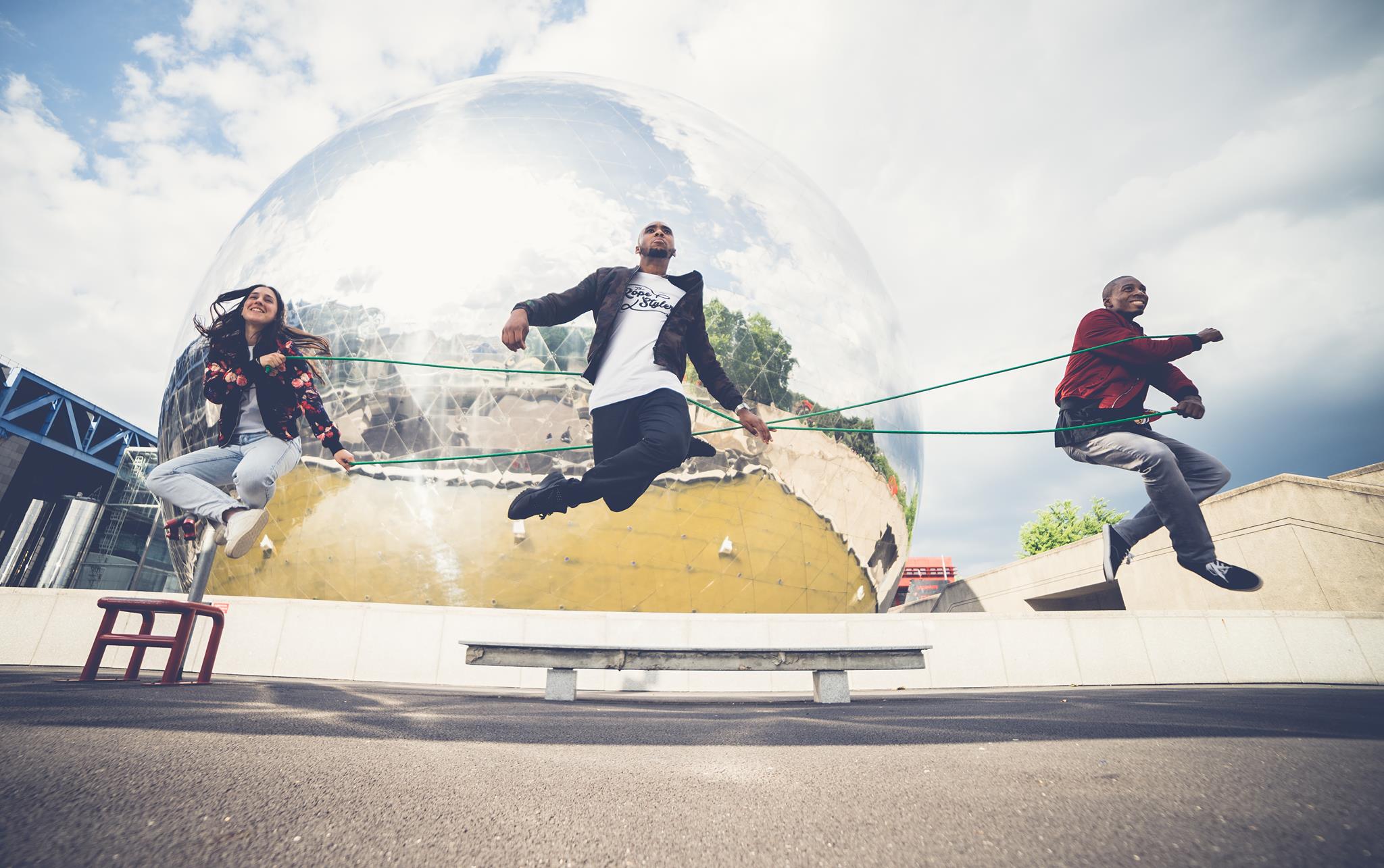
The association DDDG (Double Dutch Danse et Gymnastique) was created in 2012 by three teenagers passionate about double rope jumping.
Originally, they were looking for spaces to train and dreamed of living their passion as artists.
It is by responding to requests for Double Dutch demonstrations and initiations in local social centres that they saw the impact of the discipline.
Seeing the enthusiasm of the public, whatever the age, they realised the potential of Double Dutch to bring people together and allow moments of exchange and conviviality.
Our Values
The association DDDG is based on values that guide our actions:
Inclusiveness and Accessibility
We believe that Double Dutch is a sport open to everyone, no matter the age or level of practice.
Community Spirit
We prioritise sharing, exchange and conviviality among Double Dutch practitioners.
The Development of Professional Practice
We support passionate practitioners in their transition from amateur to professional, providing training and adapted educational tools.
Transmission
We train instructors and help structure the discipline so that it develops sustainably across the territory.
Our Goals
We have short-, medium- and long-term objectives to support the development of double dutch danse et gymnastique:
Short term
Our priority is to promote Double Dutch in France through initiations, demonstrations and playful interventions in schools, social centres and local events.
Medium term
We aim to make the practice of Double Dutch accessible to a wider public by supporting the development of regular practice venues and local structures.
Long term
Our objective is to create a solid network of partners to support the development of Double Dutch in all its forms.
Our approach focuses on the artistic and personal development of each practitioner, allowing each person to embrace Double Dutch in their own way, whether through dance or other arts.
Our Impact and Our Ambitions
Today, we measure the impact of our actions at the local level.
Thanks to our educational interventions, more and more people discover Double Dutch and its benefits, both socially and artistically.
In the long term, our ambition is to see Double Dutch practised everywhere: in playgrounds, in parks, on television and in public spaces.
Double Dutch Danse et Gymnastique
Promoting Double Dutch for Everyone !
Brandon Mongila
Subscribe to our newsletter
asso.dddg@gmail.com
+33 6 58 96 94 74
© 2024. All rights reserved.